
Patient education
Dialysis
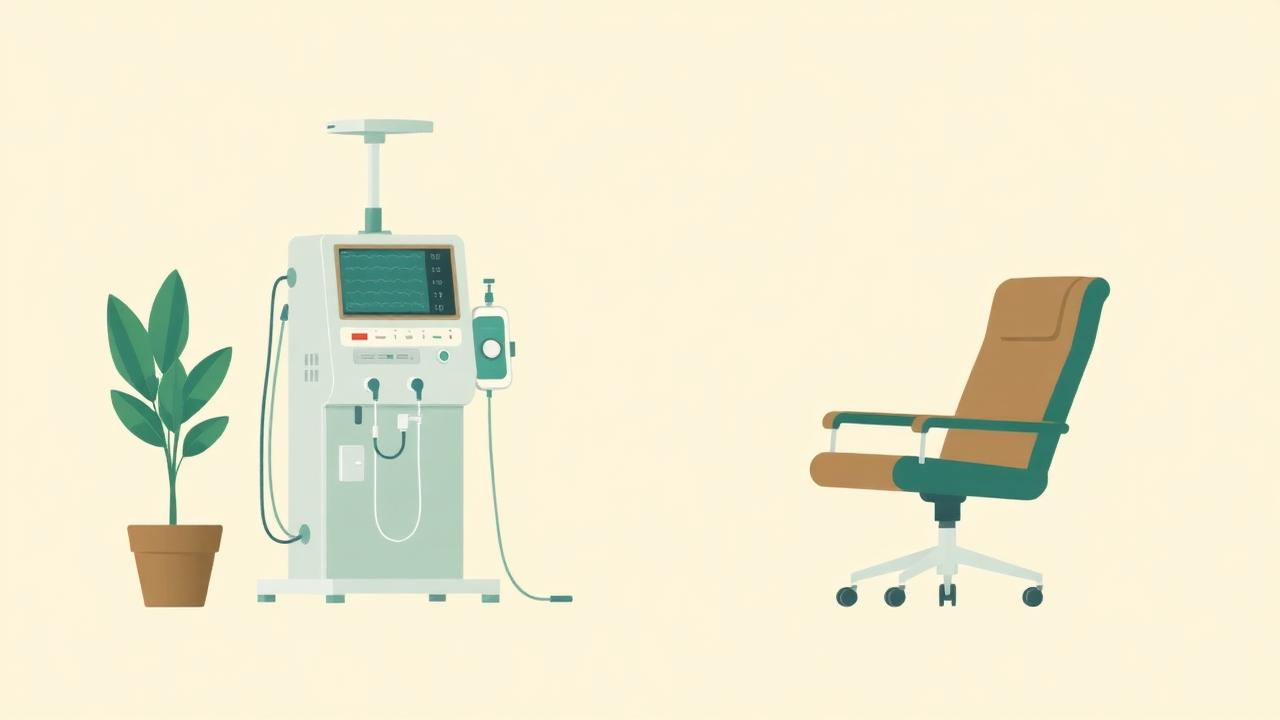
Dialysis takes over part of the work your kidneys can no longer do — removing waste products and excess fluid from the body. It can be temporary, while kidneys recover, or long-term when kidney failure is established.
The basics
What does dialysis actually do?
Dialysis replaces some — not all — of normal kidney function. It does the filtering work, while medicines cover the hormone roles your kidneys once handled.
Removes waste products from the blood
Removes excess fluid from the body
Corrects potassium and acid levels
Helps control blood pressure
Hormone functions still need medicines
Works in sessions, not continuously
The options
Two main types of dialysis
Both are effective. The right choice depends on your medical condition, home circumstances, work and personal preference.
Haemodialysis
Blood is circulated through a machine with a filter and returned to the body. Usually three sessions a week, around four hours each, in a dialysis unit — or at home in some programmes.
Peritoneal dialysis
The lining of your own abdomen acts as the filter. Fluid is exchanged through a soft catheter, several times a day or overnight by machine — done at home, by you.
Temporary dialysis
In acute kidney injury, dialysis may be needed for days or weeks only, through a neck or groin catheter, while the kidneys recover their own function.
Getting access ready
Dialysis needs a reliable way to reach the blood or the abdomen. Planning this ahead of time avoids emergency procedures and gives much better results.
The reality
What a session feels like
Most people read, watch something, work on a laptop or sleep during dialysis. The needling is brief; the session itself is not painful.
Feeling washed out after a session is common at first and usually improves as your fluid targets and dialysis prescription are fine-tuned. Tell your team — it can often be adjusted.
Things to plan for
- A regular weekly schedule
- Transport to and from the unit
- Fluid and salt limits between sessions
- Medicines taken around dialysis timing
- Diet adjustments guided by a dietitian
- Care of your access site
Living well
Getting the most out of dialysis
- 01
Do not skip or shorten sessions
Missed or cut-short sessions allow fluid and potassium to accumulate, which is the commonest reason people feel unwell or need emergency admission.
- 02
Respect your fluid allowance
Large fluid gains between sessions cause breathlessness and make dialysis uncomfortable. Ice chips, sugar-free gum and smaller cups genuinely help.
- 03
Follow your dietary plan
Potassium, phosphate, salt and protein needs on dialysis are specific and different from CKD advice. A renal dietitian makes this practical rather than restrictive.
- 04
Protect your access
Check the thrill (buzz) in your fistula daily, keep the area clean, and never allow blood pressure measurement or blood sampling from that arm.
- 05
Take phosphate binders and other medicines
Binders work only when taken with food. Anaemia, bone health and blood pressure medicines all keep you feeling better between sessions.
- 06
Look after your mental health
Starting dialysis is a major adjustment. Support groups, counselling and honest conversations with your team are part of good care, not an extra.
Ask your nephrologist whether kidney transplantation is an option for you — for many people on dialysis, it is.
When should you seek medical help?
Contact your dialysis team if you have
- Bleeding from the access site that does not stop
- Redness, swelling or pain over the access
- Loss of the thrill or buzz in your fistula
- Cloudy PD fluid or abdominal pain
- Rapid weight gain or increasing swelling
- Fever or feeling generally unwell
Seek emergency care for
Severe breathlessness, chest pain, palpitations, fainting, or a missed session combined with feeling unwell.
The most important message
Dialysis is a treatment, not an ending. With the right modality, good access and consistent sessions, most people continue working, travelling and living full lives.
These four conversations are worth having before dialysis begins.
If you are concerned about your kidney health, speak with a qualified healthcare professional. This information is for patient education and does not replace individual medical advice.